
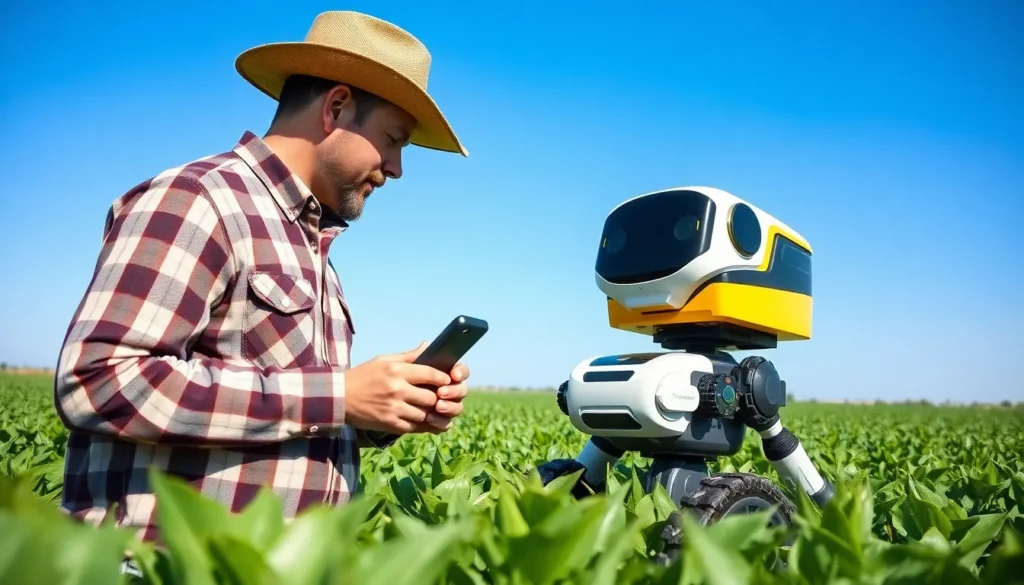
Imagine a world where farmers trade their pitchforks for robots, and crop-dusting drones take to the skies like futuristic superheroes. Welcome to the age of robotics in agriculture, where technology meets tradition in a glorious dance of efficiency and innovation. It’s not just about planting seeds anymore; it’s about planting the seeds of a smarter, more sustainable future.
As the population grows faster than a chicken on a corn diet, the pressure on farmers to produce more with less is at an all-time high. Enter robotics—these tireless machines are revolutionizing how we grow food, from automated harvesters that can pick fruit faster than a hungry teenager to sensors that monitor soil health like a hawk on a mission. Get ready to explore how these robotic wonders are transforming the fields and making farming a bit more fun (and a lot less back-breaking).
Overview Of Robotics In Agriculture
Robotics in agriculture transforms farming practices, increasing efficiency and reducing labor needs. Farmers face pressures from a burgeoning population that demands more food, leading to the adoption of various robotic solutions.
Robotic technologies serve multiple functions, including:
- Automated Harvesters: These machines harvest crops autonomously, decreasing labor costs and increasing efficiency. Their precision improves yield quality, ensuring crops meet market standards.
- Soil Monitoring Sensors: Sensors monitor soil health and moisture levels, providing real-time data that helps farmers make informed decisions regarding irrigation and planting schedules. This tech supports sustainable practices by reducing water usage and chemical applications.
- Planting Robots: These robots optimize planting processes by ensuring accurate seed placement at optimal depths. Their integration leads to better crop establishment and even growth, maximizing potential harvests.
- Drones and Aerial Imaging: Drones capture high-resolution images of fields, enabling farmers to assess crop health and identify pest infestations or diseases early. This proactive approach allows for timely interventions, reducing crop loss.
- Weeding Robots: Equipped with advanced vision systems, these robots differentiate between crops and weeds, allowing them to eliminate unwanted plants effectively. This minimizes herbicide use, supporting eco-friendly farming practices.
Robotics also facilitates data collection, analyzing field conditions, and improving decision-making. Consequently, farmers experience enhanced productivity and reduced environmental impact, paving the way for sustainable agricultural practices.
Applications Of Robotics In Agriculture
Robotics significantly enhances agricultural efficiency and sustainability across various domains.
Harvesting Robots
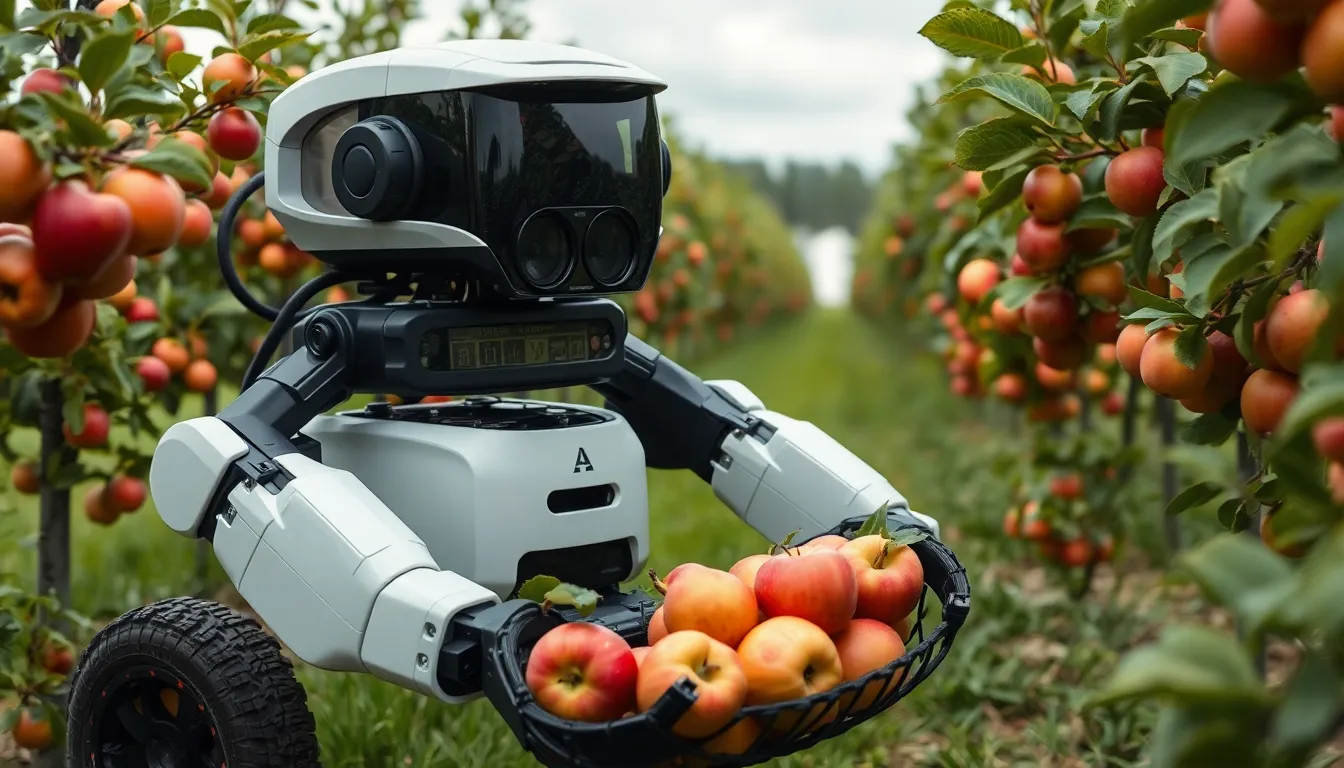
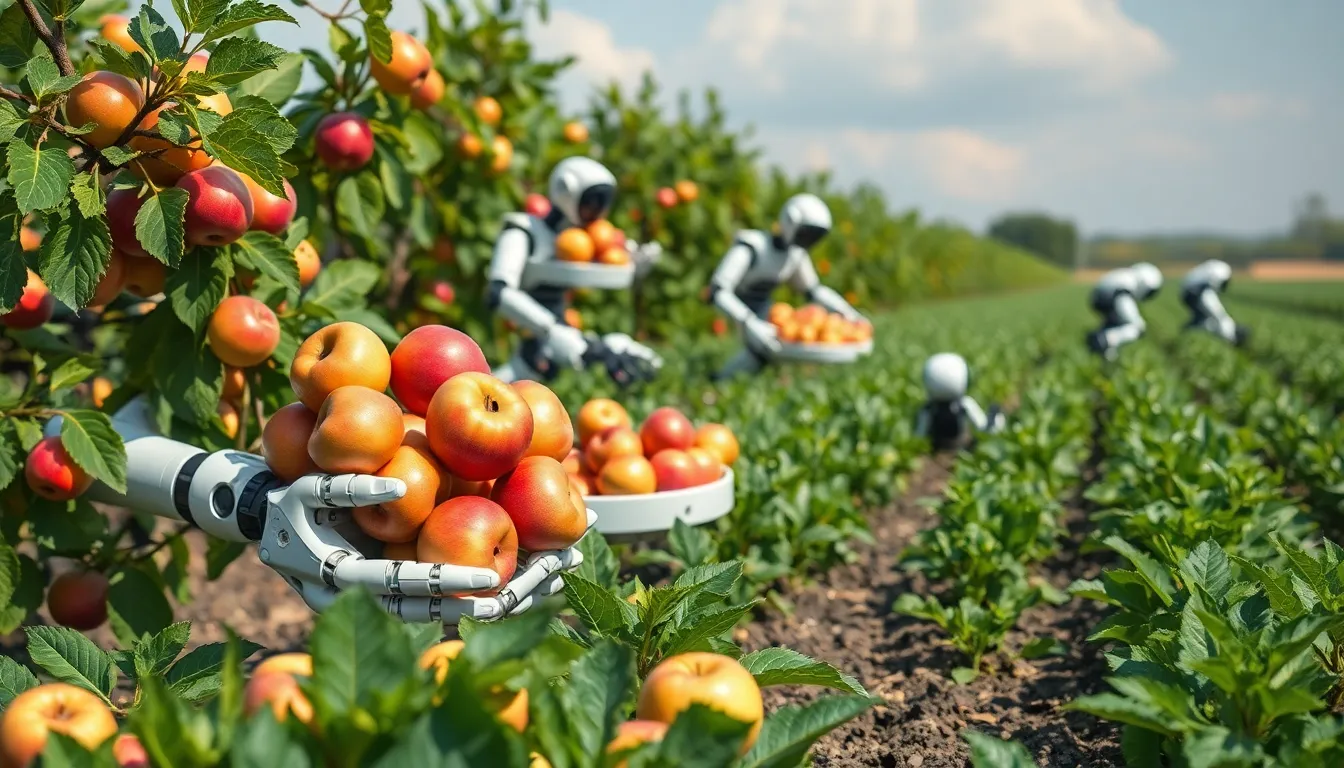
Harvesting robots automate the collection of crops, improving speed and reducing labor costs. These machines utilize advanced sensors and AI technologies to assess crop ripeness, ensuring optimal harvest timing. Examples include autonomous fruit pickers that gently harvest apples and other delicate crops without damaging them. Data from harvesting robots reveals trends in yield quality and efficiency, allowing farmers to make informed decisions. As these robots continue to evolve, they integrate seamlessly with other farm technologies, boosting overall productivity and enabling farmers to respond to labor shortages.
Planting Robots
Planting robots enable precise seed placement and efficient sowing. Equipped with GPS and imaging systems, these robots analyze soil conditions to determine optimal planting depths and spacing. For instance, some planting robots can adapt their strategies based on real-time data, enhancing crop emergence and yield. Such advancements minimize seed waste and improve growth potential. As farmers face challenges like soil degradation, planting robots contribute to sustainable practices by ensuring accurate application of seeds and fertilizers.
Weeding Solutions
Weeding robots drastically reduce the reliance on chemical herbicides by precisely targeting unwanted plants. Utilizing machine learning and computer vision, these robots identify weeds amongst crops and remove them either mechanically or via targeted herbicide application. Examples of effective weeding solutions include autonomous robots that navigate fields autonomously, ensuring minimal soil disturbance. This technology not only protects crop health but also supports environmentally friendly farming practices, contributing to the overall sustainability of agricultural ecosystems.
Benefits Of Implementing Robotics
Robotics in agriculture presents significant advantages, transforming farming practices into more efficient and sustainable operations.
Increased Efficiency
Robotic technology streamlines various agricultural processes, allowing for faster and more precise operations. Automated harvesters operate around the clock, collecting crops at peak ripeness, which minimizes waste and maximizes yield. Similarly, drone technology gathers data swiftly, providing real-time insights into crop health and soil conditions. As a result, farmers can optimize resource allocation, leading to improved productivity without extending labor hours or increasing physical strain.
Reduced Labor Costs
Implementing robotics reduces the reliance on manual labor, translating into lower operational costs. Automated systems, like weeding and planting robots, perform tasks that typically require large teams, thus minimizing labor-related expenses. The reduced need for seasonal workers during harvest times means farmers can allocate resources more effectively. This economic efficiency allows farms to remain competitive, especially in areas where labor shortages prevail.
Enhanced Crop Management
Robotics enhances crop management through precision agriculture techniques. Soil-monitoring sensors provide continuous data on moisture levels and nutrient concentrations, which allows for timely intervention. Tracking technology enables farmers to monitor fields remotely, identifying potential issues before they escalate. By utilizing these insights, farmers can tailor their practices to specific crop needs, resulting in improved plant health, higher quality produce, and greater overall sustainability.
Challenges In Robotics Adoption
Robotics adoption in agriculture faces several hurdles that impact its widespread integration into farming practices.
High Initial Investment
High initial investment remains a significant barrier for many farmers. Automating equipment, such as autonomous tractors and drones, often necessitates substantial upfront costs, including purchase and installation expenses. Smaller farms struggle to allocate funds for these advanced technologies, which can reach hundreds of thousands of dollars. Although the long-term return on investment (ROI) shows potential through increased efficiency and reduced labor costs, many farmers have difficulty justifying these expenses in the short term.
Technical Limitations
Technical limitations hinder the full potential of robotics in agriculture. Many robotic systems lack the adaptability needed to accommodate diverse crop types and varying field conditions. Environmental factors, such as soil variability and unpredictable weather, can disrupt robotic operations, leading to inefficiencies. Furthermore, limited software compatibility often results in integration challenges among different robotic technologies. Farmers may encounter difficulties when trying to implement scalable solutions, creating a hesitation to adopt these innovative systems in their practices.
Future Trends In Robotics In Agriculture
Innovations in robotics are set to reshape agriculture in the coming years. Increased utilization of Artificial Intelligence (AI) will enhance machine learning capabilities, allowing robots to adapt to changing field conditions and crop varieties with greater efficiency. Predictive analytics will play a vital role in resource management, enabling farmers to anticipate issues such as pest outbreaks or drought conditions.
Development of autonomous vehicles will expand, with driverless tractors and aerial drones becoming standard tools. Automated tractors equipped with GPS technology will provide precision tillage, reducing soil compaction and optimizing fuel usage. Drones will offer real-time monitoring of crop health, further advancing data-driven decision-making.
Integration of the Internet of Things (IoT) with robotics will streamline processes through connected devices. Soil moisture sensors, linked to robots, will facilitate precise irrigation, minimizing water waste. Automated algorithms will analyze sensor data, providing real-time feedback on crop conditions, which will help farmers make informed decisions swiftly.
Increased collaboration between robotics developers and agricultural professionals will accelerate the adoption of customizable solutions.These tailored systems will address specific challenges faced by individual farms, resulting in enhanced productivity and sustainability. Emerging technologies, such as robotic exoskeletons, will support farmworkers in labor-intensive tasks, increasing efficiency while reducing physical strain.
Investment in research and development is likely to rise, as stakeholders recognize the potential of robotics in combating food security issues. Governments and private entities will push for policies that promote innovation in agricultural technologies, fostering an environment conducive to further advancements.
Overall, the future of robotics in agriculture promises smarter, more efficient farming practices that support sustainable growth and environmental stewardship.
The integration of robotics into agriculture is reshaping the landscape of farming. As technology continues to advance, farmers are better equipped to meet the demands of a growing population while promoting sustainability.
With tools like automated harvesters and precision planting robots, agricultural practices are becoming more efficient and less labor-intensive. This shift not only enhances productivity but also supports environmentally friendly practices.
While challenges remain in terms of investment and technology adoption, the future looks promising. Continued collaboration between developers and farmers will drive innovation, leading to tailored solutions that address specific agricultural needs. The journey toward smarter farming is just beginning, and the potential for growth is immense.


